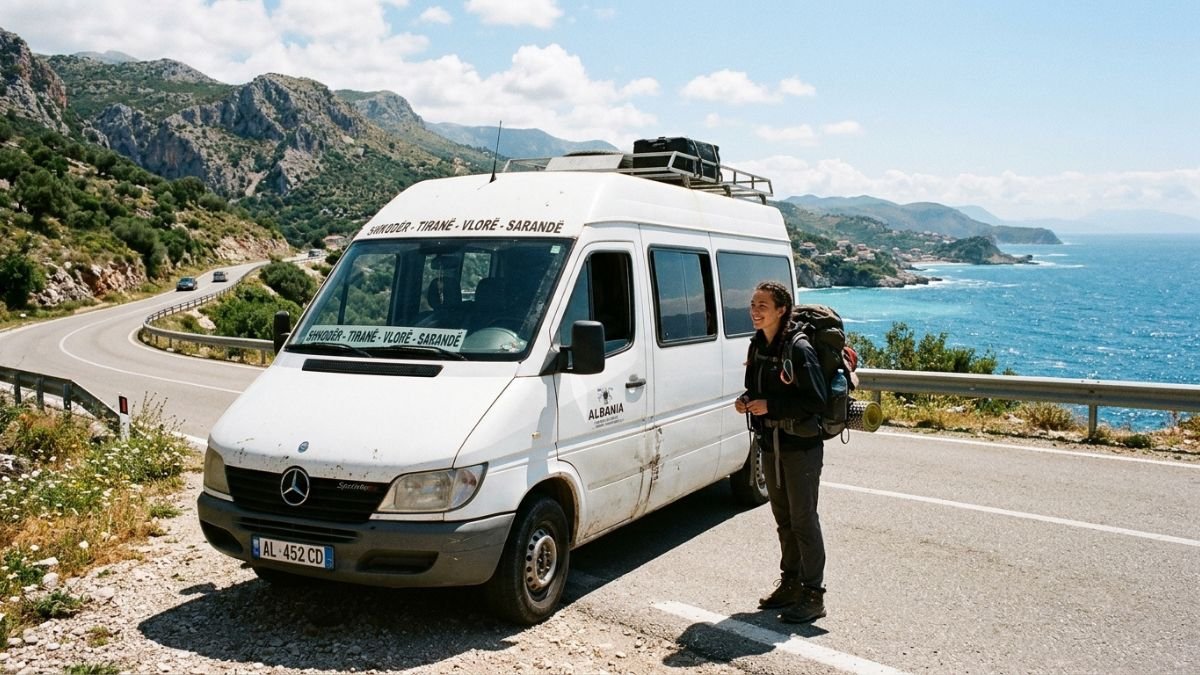
Many people are put off travelling to Albania without a car. In your head you can already see the twists and turns of the mountain roads, confusing schedules and inability to get to the coast. It’s a fair worry, because Albania doesn’t have a polished rail network or one app that lists every bus. Still, plenty of travelers cross the country every summer with a daypack and a pocket of cash.
In this guide, I’ll show you how buses, furgons and the few trains actually work. You’ll see how to reach Berat, Gjirokastër and the Riviera from Tirana. I’ll also explain what to do when the last bus leaves early. Tickets, costs and safety for solo travelers get their own sections too. By the end, you’ll have a simple 7-day plan you can follow.
Can You Really Travel Around Albania Without a Car?
You can. In fact it’s actually easier than most guides suggest as the country is small overall, meaning the most of your transfers between major towns will only take a couple of hours. The buses and furgons between Tirana will have you to almost everywhere you would want to visit but you won’t get precise timing as there is often some flexibility on times and not always signs showing where you need to be. It’s a case of trading time (you’ll have to wait longer) for money (it won’t cost you much)
Car-free travel in Albania suits people who enjoy a bit of improvising. If you like to plan every minute, you’ll find the buses frustrating at times. Mountain villages and remote beaches are the real weak spot, since public transport thins out fast outside the main towns. Stick to the classic route of Tirana, Berat, Gjirokastër and the coast, and you’ll rarely feel stuck.
How Buses, Furgons and Trains Work in Albania .
There is an extensive network of public transport in Albania. Long distance travel is done by large buses whilst local travel can be done on furgons (minibus shared taxis). There are also trains but these are not really used by tourists.Knowing which option fits which route saves you hours of guessing at a hot roadside. None of them run to a strict clock, so a relaxed attitude helps.
How Intercity Buses Work
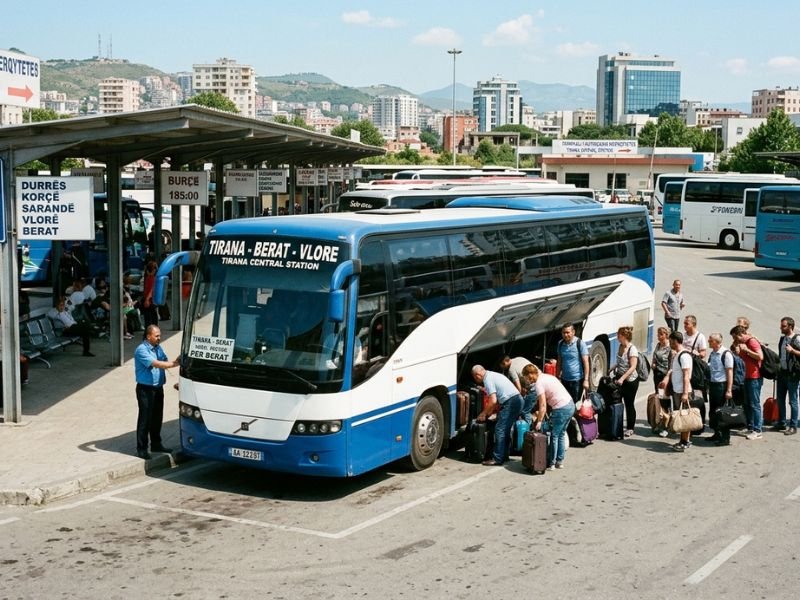
Intercity buses are the bigger, slower option, and they’re usually the most comfortable. In Tirana, departures are spread across a few different terminals depending on where you’re heading. So always check which one serves your route before you leave your hotel. Expect the bus to wait until it’s reasonably full, not just until the clock says go. Once you’re on board, a conductor normally comes around and collects the fare in cash.
What a Furgon Is and When to Use One
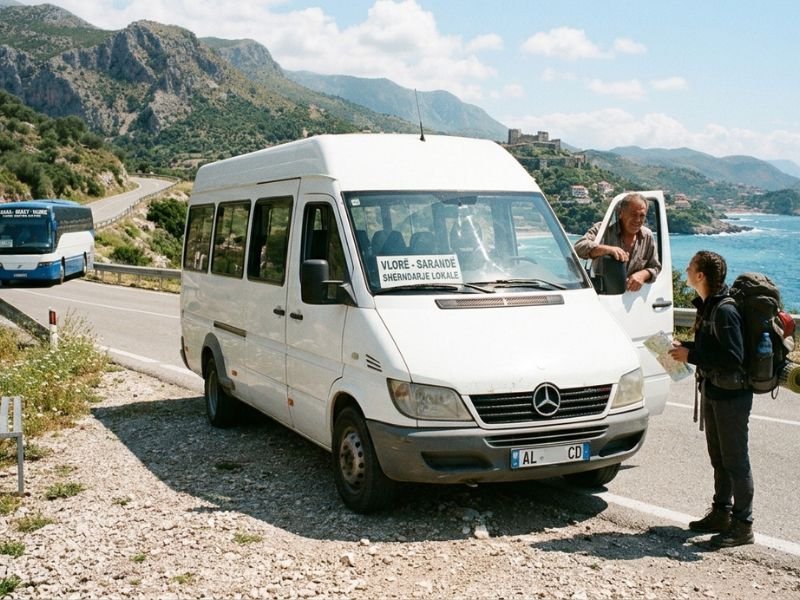
A furgon is a shared minibus that runs a fixed route and leaves when it’s full. They’re often quicker than big buses, and they serve smaller towns that buses skip. You’ll usually find them lined up near a square or a roadside, with the driver calling out the destination. Ask the driver to confirm the stop before you board. Pay in cash, usually once you’re on the road.
Why Trains Won’t Get You Far
Albania does have trains, but the network is small and doesn’t reach most places on a typical visitor route. Services are limited, and timetables change, so it’s smart to check locally rather than rely on old information. For Berat, Gjirokastër and the south, you’ll almost always end up on a bus or furgon instead. Treat any train ride as a bonus, not as your main plan.
Getting From Tirana to the Main Sights by Public Transport
With Tirana as your base almost all journeys will start here. From Tirana you can head north to Shkodër, south towards Vlorë and the coast or east inland to Berat and Gjirokastër. The connections are mostly straightforward, but can be a bit tricky if you’re going between two smaller towns as you often have to change at one of the larger hub towns. If you think of all your journeys as spokes on a wheel, the map makes more sense.
Tirana to Berat and Gjirokastër
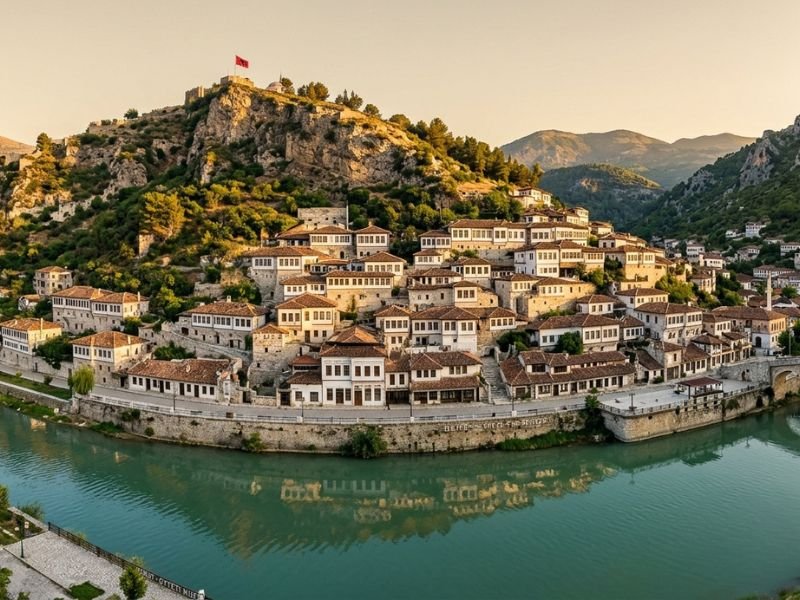
Berat and Gjirokastër are Albania’s two famous stone towns, and both work well by public transport.There are buses and furgons from Tirana to Berat making this an easy option. It is a bit further down south to Gjirokastër which makes this a longer journey. Some journeys heading South will go on to Sarandë. This means that if you travel directly from Berat to Gjirokastër you may need to change meaning it will take you longer.
Tirana to Shkodër and the North
Shkodër is the main gateway to the north, with its castle and lake close by.Buses and furgons go here from Tirana, making it a good stop for one or two nights. You can also continue from Shkodër across to the border with Montenegro, making it an ideal place to include in a longer Balkan tour. Beyond the city, mountain villages are much harder to reach without your own wheels, so be realistic about how far you’ll go.
Tirana to Vlorë, Himarë and Sarandë
Most summer visitors head to the coast, and the route runs south from Tirana through Vlorë. Buses and furgons connect Tirana with Vlorë, and some continue along the coast to Himarë and Sarandë. Sarandë makes the best base because it’s the main town on the southern coast and has the most onward options. Expect the ride south to eat a good part of your day. So leave in the morning, not after lunch.
Exploring the Albanian Riviera Without a Car
The Albanian Riviera runs from Vlorë on the south coast through Himarë to Sarandë and Ksamil. While there is good transport between the larger towns, the smaller beaches can be a bit of a problem. Without a car, you’ll mostly hop between a few bases and swim near each one. That’s perfectly fine, because each base has beaches within a short walk or ride. Trying to reach every hidden cove is where plans fall apart.
Moving Between Himarë, Sarandë and Ksamil
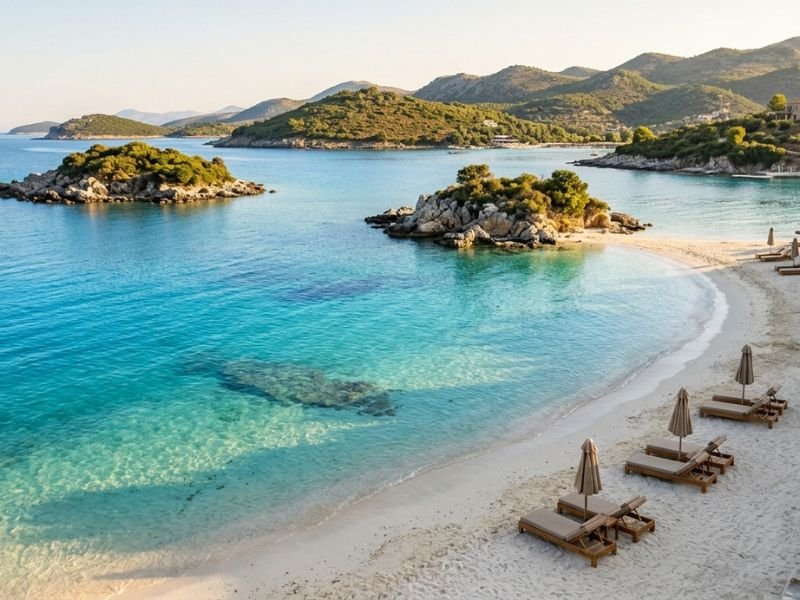
There are buses and furgons that run between Himarë and Sarandë. There are also local mini-buses running between Sarandë and Ksamil. Some just take a taxi. Ksamil is quite small so that you can easily walk around the majority of it. Pick one base, with Sarandë being the easiest, and do day trips from there. That beats packing your bag every single night.
What to Do When the Last Bus Has Gone
Services thin out by late afternoon, and on quiet days a furgon may not leave at all. That’s when a plan B matters.You can ask your hotel/hostel to book a taxi and set an agreed price. Or you could carpool with other travellers to save some money. Better still, leave early in the day, because the last connection is the first one to disappear.
Tickets, Cash and Timetables: What to Know Before You Ride
Paying for transport in Albania is simple once you know the habits. Most rides run on cash, and there’s rarely a ticket office to queue at. You usually buy your seat from a conductor or driver after you board. Prices tend to be low, but they’re rarely printed anywhere you can check. So it helps to know the rough fare before you go.
Paying the Driver and Carrying Cash
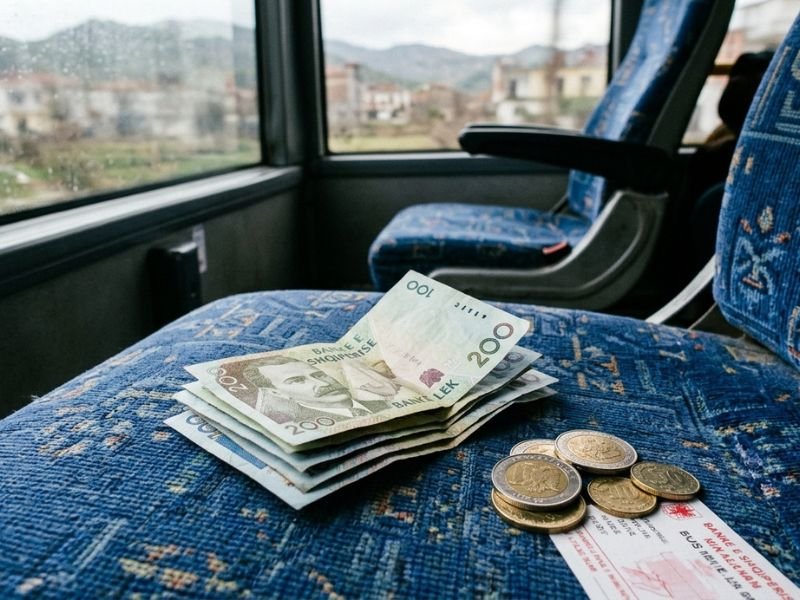
Carry small notes in the local currency, the lek.There is often no change from big notes and there are a limited number of card machines on buses. Withdraw some cash into Tirana or any other major towns before heading south as there may be few ATMs in smaller places. Keep some cash on you to pay quickly when the conductor comes. If you are unsure then ask how much it will cost.
Finding Timetables and Booking Ahead
Timetables are the weakest part of Albanian transport. While Google Maps will give you an idea of the routes available, it is not always accurate. It is best to ask the staff at your hotel/hostel. Usually they will have an idea of when the next one is leaving. If you are going somewhere that takes a long time or is busy it is best to get to the terminal early and ask people. A few routes can be booked online but generally you will need to walk to the terminal and pay as you go.
Smart Tips for Albania Without a Car (and Mistakes to Skip)
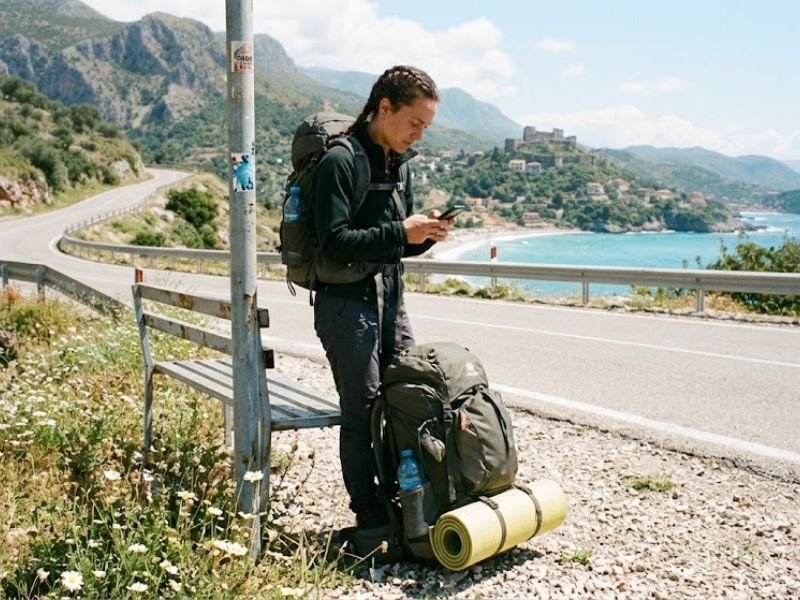
There are a few things you can do to make your Albania car free experience run smoothly. Depart early in the morning as these are the most reliable times and give you more flexibility if anything goes wrong. Pack light as there isn’t much space in the furgons. Download maps offline so that you can still navigate your way around. And be flexible with your plans and don’t have a tight onward connection the same day.
The majority of mistakes happen due to the assumption that Albania is like Western Europe. Don’t be fooled by the time table. Departure times are not always based on the time so they will often be late. Many travellers forget to check the stop with the driver and will be much later getting to their hotel. Lastly, many people forget to leave some cash out. If you have a flight to catch make sure to leave a couple of days buffer.
A 7-Day Albania Itinerary Without a Car
This is a straightforward option, with one main attraction to visit each day of travel and lots of time to relax. Follow the classic route from Tirana to Berat and then on down to Gjirokastër and coastal towns. You’ll sleep in only four bases, so you won’t spend the week repacking your bag. Treat the days as a template, because delays can shift everything by half a day. If a bus runs late, drop one stop and stay put.
Days 1–3: Tirana and Berat
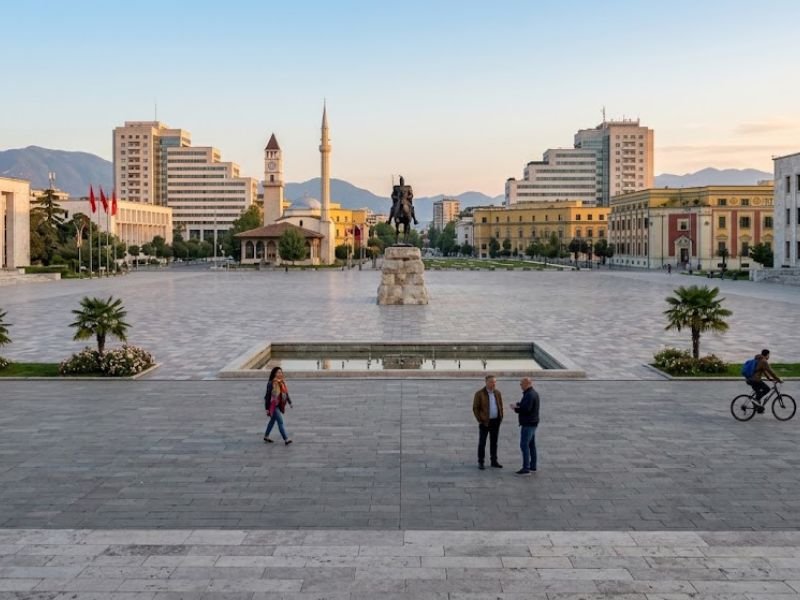
On the first two days you can walk around Tirana easily. Get into the swing of things by exploring Skanderbeg Square and the Blloku area. Perhaps visit one or two museums to get over any jet lag. Head off on the third day either by bus or furgon to Berat. Explore the old town and head up to the castle. Stay overnight here to enjoy some great views on the hillside at sunset.
Days 4–5: Gjirokastër and Sarandë
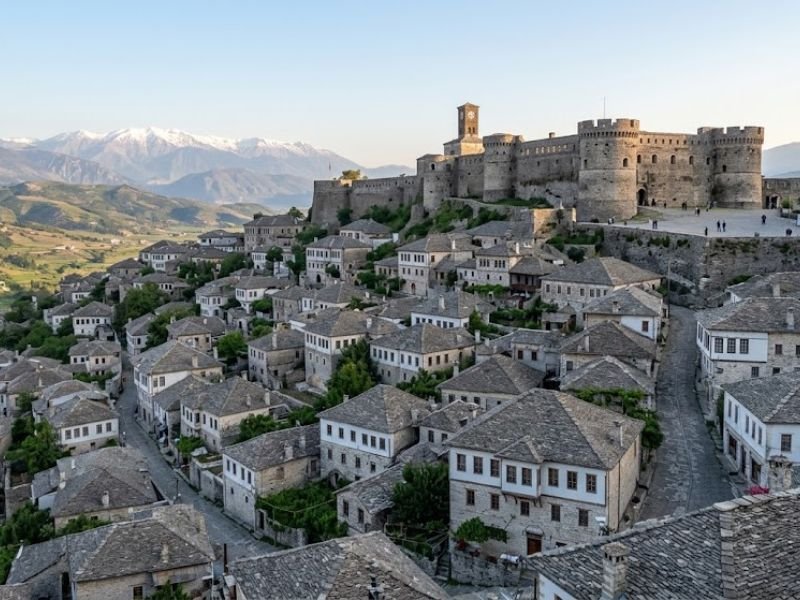
It’s a long travel day so set off early from Berat. You may have to change buses en route to Gjirokastër so plan your afternoon around this. Explore the steep stony streets and castle and spend the night. On day 5 head to Sarandë. This can be done by bus/furgon in the morning. Check into somewhere close to the seafront and spend the evening walking along the promenade.
Days 6–7: Ksamil and the Trip Back
Use day six for Ksamil. Take the short minibus or a taxi from Sarandë, swim, and head back before the afternoon services thin out. On day seven, ride north to Tirana, and leave first thing in the morning. Don’t book a flight for that same evening. A spare night in Tirana keeps the end of your trip calm, even if a bus shows up late.
How Much Does Car-Free Travel in Albania Cost?
Transport is one of the cheaper parts of an Albania trip, and that’s a big reason car-free travel works so well here.The cost of using local buses and furgons is much cheaper than hiring a car. You save money on fuel, parking and insurance. The longer your journey is, the more you will pay, however this is not too much extra. The main thing you are likely to pay most is for your accommodation, particularly if you are staying on the coast during peak summer.
Try to avoid the busy months (July-August) as prices will be higher. Try visiting local places and ask the host where they get the best value for money. When the route is an awkward one, try to share a taxi with other Travellers to cut your costs. Take some small notes so that you don’t get ripped off by the taxi driver if they can’t give you change. Set a daily budget, since cash spending disappears quickly.
Is Albania Safe for Solo Travelers Without a Car?
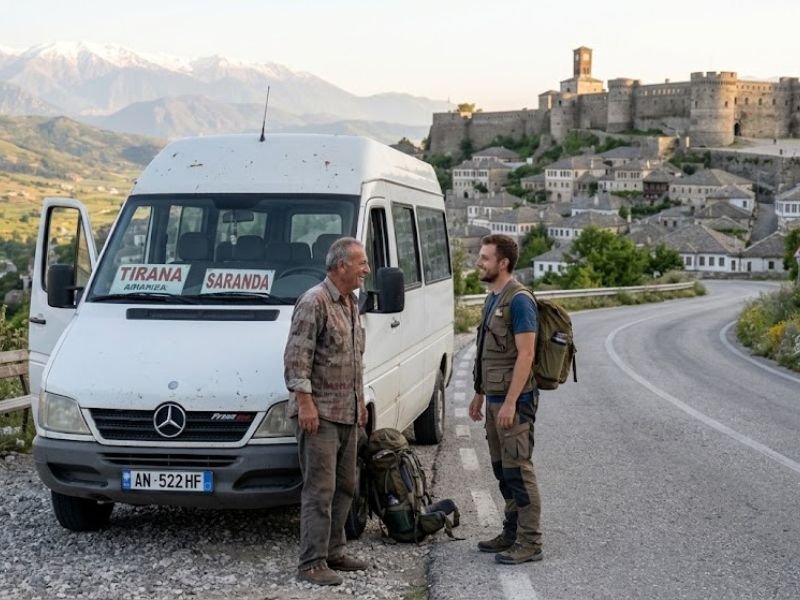
Albania is an easy country to travel alone. The people are generally friendly and helpful and drivers will usually tell you which stop you need to get off at. However, take the usual common sense precautions. Keep your bag with you on busy buses and avoid showing off valuables at hectic bus stations. Try to travel during the day as this is when most services will be available and the roads will feel more relaxed.
If you are travelling along the main circuit between Tirana, Berat, Gjirokastër and the coast then everything will be straightforward. If you venture into the mountains or later in the evening things may become more difficult. Be sure to check travel advice for your government before your trip and have the number of your accommodation to hand. Travelling in hostels will help as everyone will have the latest information about which buses are running.
FAQs About Traveling Albania Without a Car
How to Travel in Albania Without a Car: Is It Really Possible?
Yes. Buses and furgons link Tirana with Berat, Gjirokastër, Shkodër and the coast, so a car isn’t needed on the main route.
Is Public Transport Reliable in Albania?
On main routes, it’s reasonably dependable, but departure times shift. Leave early and keep a backup plan.
Can You Visit the Albanian Riviera Without a Car?
Yes. Take buses and furgons to Himarë, Sarandë and Ksamil, then walk or use local minibuses between nearby beaches.
How Much Does It Cost to Get Around Albania by Bus?
Fares are low compared with renting a car. Pay in cash, and carry small notes.
Do I Need to Speak Albanian to Use Buses and Furgons?
No. Say your destination, show it written on your phone, and confirm the stop with the driver.
Is It Easy to Travel Albania by Bus as a Solo Traveler?
Yes, on the main loop from Tirana. Travel in daylight, and ask hostel staff for current departure times.
Final Thoughts on Traveling Albania Without a Car
So now you know how to explore Albania without a car. Get up early and always take cash; never be too strict with your schedules. Stay in just a couple of towns and the country will all open up to you!
Pick one route from this guide and start sketching your own trip. Save the 7-day plan, and share it with a friend who’s still unsure about going. Questions about a route? Leave a comment below, and I’ll help you sort it out.

Muhammad Asad Iftikhar Ansari is the founder of TheSmartRoutes, sharing practical Europe travel tips, itineraries, and budget guides to help travelers plan smarter trips.
1 thought on “How to Travel in Albania Without a Car: A Practical Guide”