
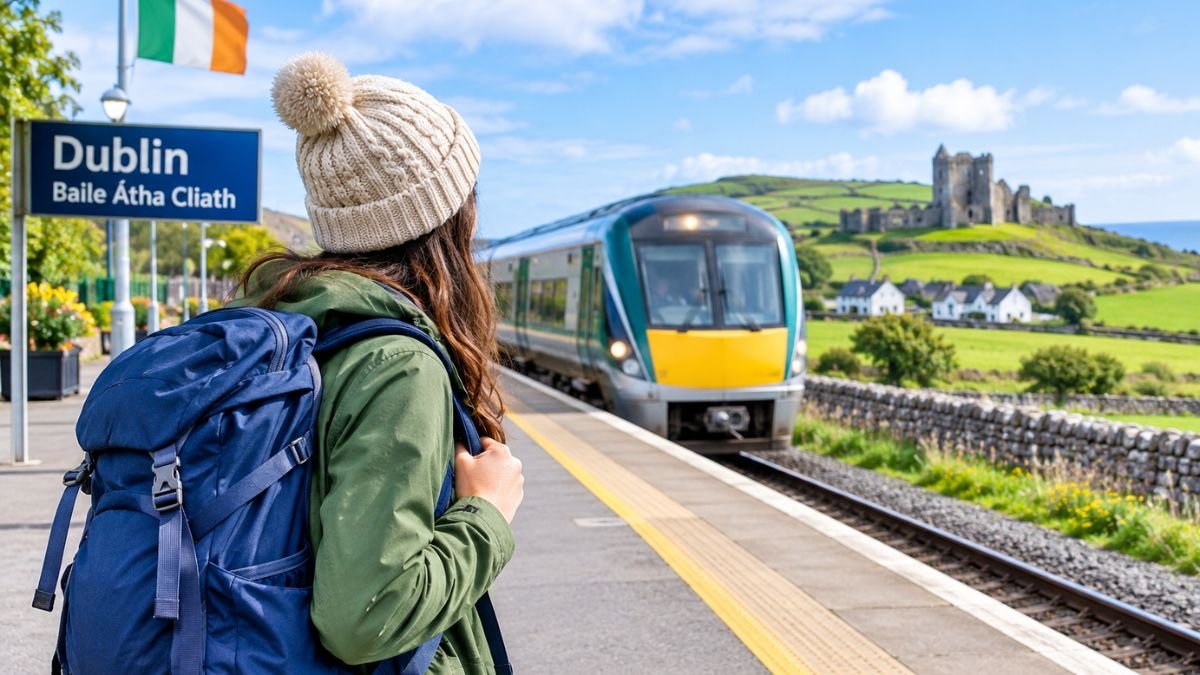
Seeing Ireland without a car sounds risky until you actually try it. Picture a narrow country road, traffic on the left and a tour bus coming straight at you.This is a genuine concern but don’t worry too much! Most of the places you will want to visit can be accessed via the train, bus or city transport. So you can avoid the stress of driving whilst seeing the best of the country.
This guide shows you how trains and buses actually work across Ireland. You’ll also learn how to get from Dublin Airport into the city. Next, we’ll look at the best cities to visit, from Dublin and Galway to Cork, Killarney and Belfast. After that, you’ll find ready-made 3, 5 and 7-day plans, a realistic cost breakdown and practical tips. By the end, you’ll know whether this kind of trip suits you.
Is It Possible to Travel Around Ireland Without a Car?
It’s absolutely possible to travel around Ireland without a car and much easier than most people think. Most major towns and cities can be travelled between using either a train or bus plus many of the major attractions are close to stations. Dublin has regular links to Cork, Galway, Limerick and Belfast so if you’re travelling around these major hubs you’ll rarely find yourself missing a car. It will be more of a base hopping trip rather than a long road trip.
There’s a catch, though, and you should know it early. Ireland’s rail network fans out from Dublin, so cross-country trips can take a while.You may find that there are very few buses to some rural areas including parts of the Wild Atlantic Way so tours and short taxi trips can be planned around this. You won’t have to wait for ages at a desolate bus stop.
How to Get Around Ireland Without a Car
There are a few main options and most people will combine several. The train is a fast and comfortable option but not very flexible. The bus can take you to many smaller towns and can be cheaper. There are trams and local buses in cities. If you want to see some of the difficult to get to scenery there are guided tours.Here’s how each one works in real life.
Traveling by Train in Ireland
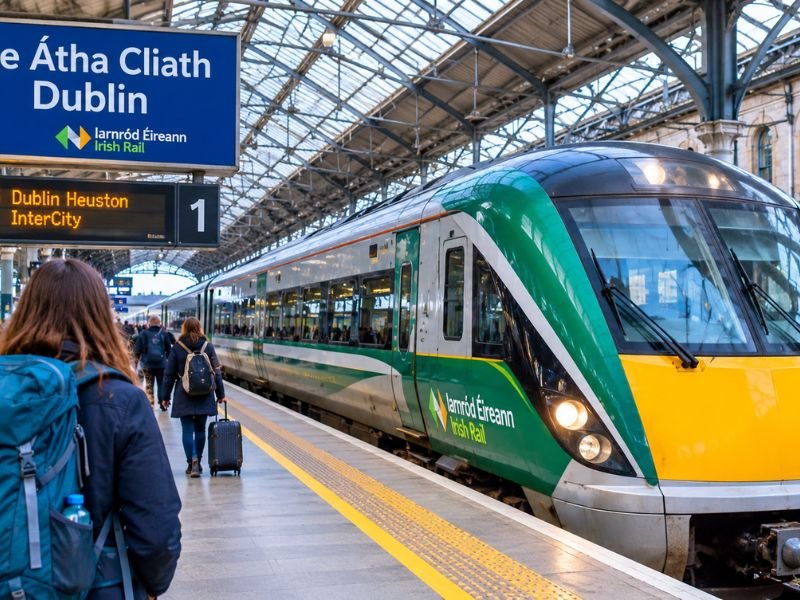
Most inter-city trains are operated by Irish Rail. They run from two main stations – Dublin Heuston and Dublin Connolly. From Heuston, trains go straight to Cork and Galway. To Killarney usually involves one change at Mallow. Connolly is the hub for the Enterprise service to Belfast. All seats are comfortable and you get great views. It’s best to book on-line in advance as usually lower prices are available for advance booking.
Traveling by Bus in Ireland
Buses reach many of the places that trains don’t.The Expressway is run by Bus Éireann, while Citylink and GoBus operate on more busy routes such as Dublin to Galway. Coaches will generally be cheaper than trains but can take longer. In Northern Ireland most buses are run by Translink. It is best to check the timetables the night before as there may only be a few services running in rural areas.
Using Local Transport, Guided Tours and Private Transfers
Dublin has the Luas tram, DART coastal trains and Dublin Bus, and a Leap Card makes paying simple. A good option if you’re visiting Cork, Galway or Belfast is that they are small cities which are easily walked around. If you want to visit somewhere like the Cliffs of Moher it makes sense to do a full day guided tour to save any hassle. A private transfer or taxi is a great option too for short journeys. Especially if you have lots of luggage!
Traveling from Dublin Airport Without a Car
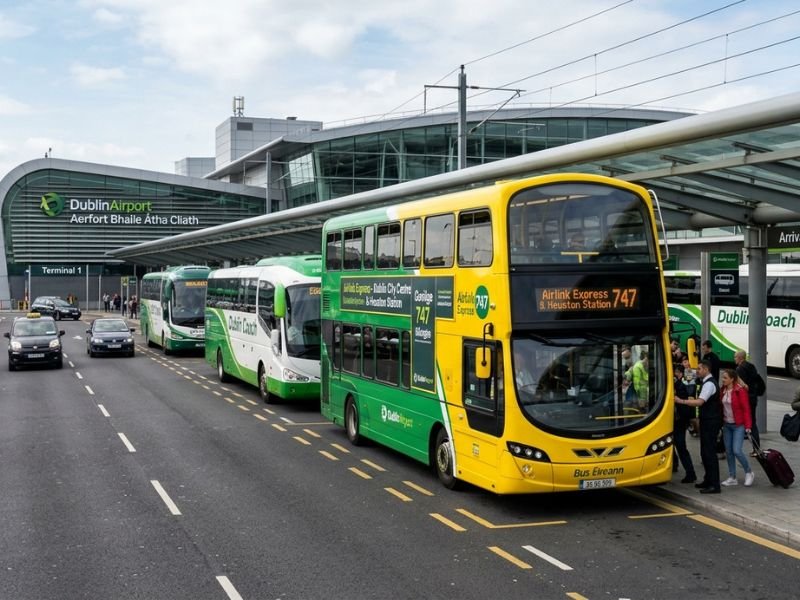
Dublin Airport doesn’t have a train or tram link yet, so buses and taxis do the work.The Airlink Express and Aircoach go directly into the city centre, while Dublin Bus go to the suburbs. Fortunately the majority of services are frequent and will take approximately thirty to forty-five minutes to reach your destination, however if you’re flying in late at night check what time the last service is.
Getting tickets is straightforward. Most airport buses allow payment by card and some operators offer a slight discount for buying tickets online. Taxis will cost more but will be helpful for large amounts of luggage or if your family are tired. Generally it will only take a short walk or a brief bus ride to get to your hotel. Make sure to save the address of your hotel offline in case you lose signal on your phone.
Best Places to Visit in Ireland Without a Car
Ireland’s best-known destinations sit on the rail and bus network, so five bases can anchor a whole trip. Each one works well on foot and connects to Dublin without much fuss. Still, Ireland is small, but the distances add up when you rely on public transport. If you don’t have much time pick two or three of them but if you have a bit more time you can connect them all together. Below are some ideas for how to get there and what to do whilst there.
Dublin: Explore Ireland’s Capital
Dublin is easy to reach and easy to walk, which makes it the natural starting point.Trinity College, Temple Bar and St Stephen’s Green can all be visited within a short walk of each other. The larger attractions such as Guinness Storehouse and Kilmainham Gaol can be reached by bus or Luas. Kilmainham should be booked in advance as tours often can get fully booked. If you need a break then the DART will take you to coastal towns such as Howth.
Galway: Discover the West Coast
From Dublin, Galway is easily accessible by train or bus in 2.5 hours. The town itself is small with lots of colour in the streets, great music in the pubs and lots going on in the Latin Quarter. Head through to the Salthill promenade for some great Atlantic Ocean views at sunset. Galway is also a great base to visit the Cliffs of Moher. You can do a guided day tour here so book a couple of days in advance during busy times of the year.
Cork: Explore Southern Ireland
A direct train takes around 2.5 hours to get to Cork. The English Market is a great place to have lunch and taste some local cuisine. After that you can stroll up to the famous Shandon bell tower and enjoy some shopping in the area. If you are looking for a half day out you can also jump on the suburban train to Cobh, a brightly coloured harbor town. There are buses available to Blarney castle too, so you can visit it without a car.
Killarney: Visit Ireland’s National Park
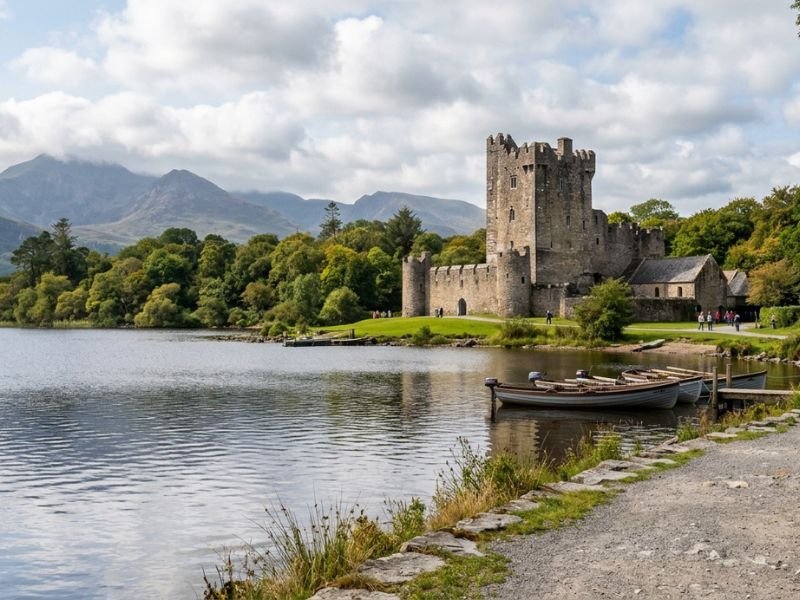
Killarney is the main entry point into the southwest. Trains from Dublin generally stop at Mallow. The town is right on the edge of the Killarney National Park, making it easy to walk to the lakes and Ross Castle. To get to Muckross House you will need to hire a bike or a jaunting cart as it is a bit further out. The best option for seeing the Ring of Kerry or Gap of Dunloe is to do a guided tour, there is very little public transport available. Allow yourself 2 nights here to make the most of the area.
Belfast: Explore Northern Ireland
The simplest choice for a base is Belfast. The Enterprise train from Dublin Connolly takes around 2 hours. You will normally head to Titanic Belfast and Cathedral Quarter which can be accessed by bus or walking. A black cab or walking tour explains the city’s history and its famous murals. Also, remember that Northern Ireland uses pounds sterling, not euros. For the Giant’s Causeway, join a day tour or check Translink’s seasonal bus.
How to Plan an Ireland Itinerary Without a Car
To travel through Ireland without a car you must try to limit your travelling. Choose a few places to base yourself and do some day trips. The best transport options are trains and buses between large cities so limit your stops.Also, leave a buffer day if you’ve got an early flight home. These three plans are starting points, so swap cities to suit your interests.
3-Day Ireland Itinerary
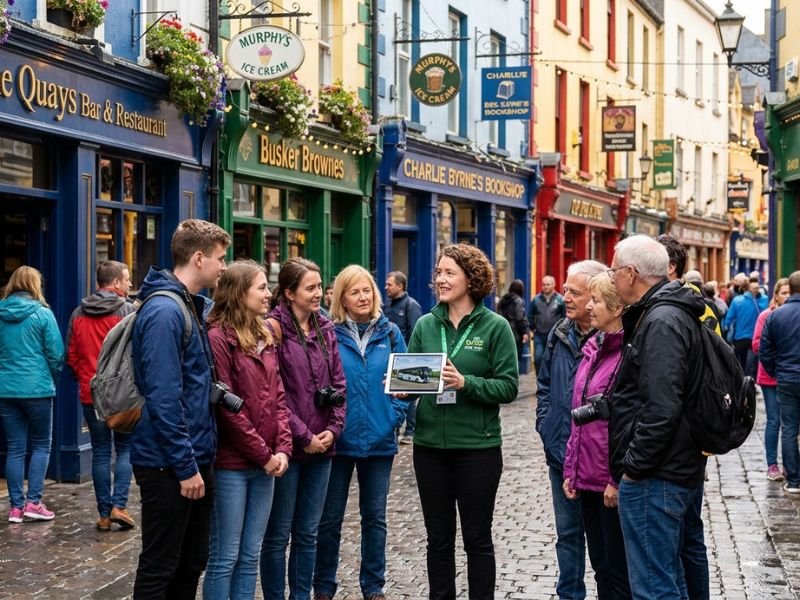
Spend day one in Dublin, walking between Trinity College, Temple Bar and St Stephen’s Green. On day two, take the train to Galway and spend the afternoon in the Latin Quarter. Day three is for the Cliffs of Moher on a guided tour from Galway. Catch a bus back to Dublin that evening or the next morning. It’s a short trip, but it covers the capital, the west coast and one big-name sight.
5-Day Ireland Itinerary
Stay in Dublin for one day and take the train to Galway the next. Take a guided tour of the Cliffs of Moher on day 3. Enjoy the great pubs in Galway that evening. Then take the bus from Galway to Cork on day 4 (it goes via Limerick). Use day five for the English Market and a quick train ride to Cobh. It’s busy, so pack light and book your tours early.
7-Day Ireland Itinerary
With seven days, follow the five-day plan but leave Cork for Killarney on the evening of day five. You’ll usually change trains at Mallow. Spend day six on a guided Ring of Kerry tour.Take the train back to Dublin on the seventh day so you have time to catch your flight. If you’re tempted by Belfast then skip Killarney. Take the Enterprise train from Dublin to travel north.
How Much Does It Cost to Travel Ireland Without a Car?
Traveling Ireland without a car often costs less than renting one, once you add fuel, parking and insurance. The main costs will be for accommodation, train/bus travel between towns/cities and tours. The cost of trains and buses between towns is reasonably cheap but tours such as those to the Cliffs of Moher can become expensive. Budget for those separately so they don’t surprise you.
There are a few small things you can do to save money but still have a great time. Get a Leap card in Dublin. Usually the tap on fares will be cheaper than cash. Book intercity train tickets in advance and check if a return ticket is cheaper than two single tickets. There are plenty of free attractions and walking tours (where you pay a tip). Combine these with paying tours. Staying close to a station will also help save on taxi fares.
Tips for Traveling in Ireland Without a Car (Including Where to Stay)
Where you sleep matters more without a car. Stay in the city centre or near the train or bus station, so you can walk to most things. In Dublin, areas near Connolly or Heuston station work well for early trains. In smaller towns, B&Bs on the main street are convenient and often include breakfast. Before you book, check the walking route from the station.
Pack light, because you’ll be lifting bags onto buses and trains. Download offline maps and screenshot timetables, since mobile signal can drop in rural areas and on some trains. Also check the last service of the day, as some routes stop early. Weather changes fast in Ireland, so carry a light rain jacket. Finally, book popular tours a few days ahead in summer.
Frequently Asked Questions
Can you explore Ireland without a car?
Yes, you can. Trains and buses link Dublin, Galway, Cork, Killarney and Belfast, and guided tours cover the harder-to-reach sights.
Is public transport reliable in Ireland?
Mostly, between the big cities, where services run often. Rural routes are thinner, so check timetables and last services the day before.
Can you visit the Cliffs of Moher without a car?
Yes. The easiest way is a guided day tour from Galway or Dublin. A regional bus may also run in season, so check current timetables.
Is it easy to travel around Ireland by train?
Yes, on the main lines out of Dublin to Cork, Galway and Belfast. Book ahead for better fares, and expect changes for smaller towns.
How many days do you need to explore Ireland without a car?
Three days covers Dublin and Galway. Five to seven days lets you add Cork and Killarney or Belfast without rushing.
Final Thoughts on Ireland Without a Car
Yes, for most people it is. Without needing a rental car things are less stressful. You don’t have to worry about finding somewhere to park and you can spend more time taking in the beautiful scenery. The short distances, great scenic train journeys and walk friendly cities mean you will have an easy time.
You will find travel much easier if you only use a couple of quality hubs, using necessary rail and tour services plus guided tours to get you around more remote areas. Take your pick from the following itineraries, look up the most recent timetables on Irish Rail and Translink to start planning!

Muhammad Asad Iftikhar Ansari is the founder of TheSmartRoutes, sharing practical Europe travel tips, itineraries, and budget guides to help travelers plan smarter trips.
2 thoughts on “Traveling in Ireland Without a Car: A Complete Guide for Visitors ”